AI agents vs chatbots: the difference that decides whether AI pays for itself
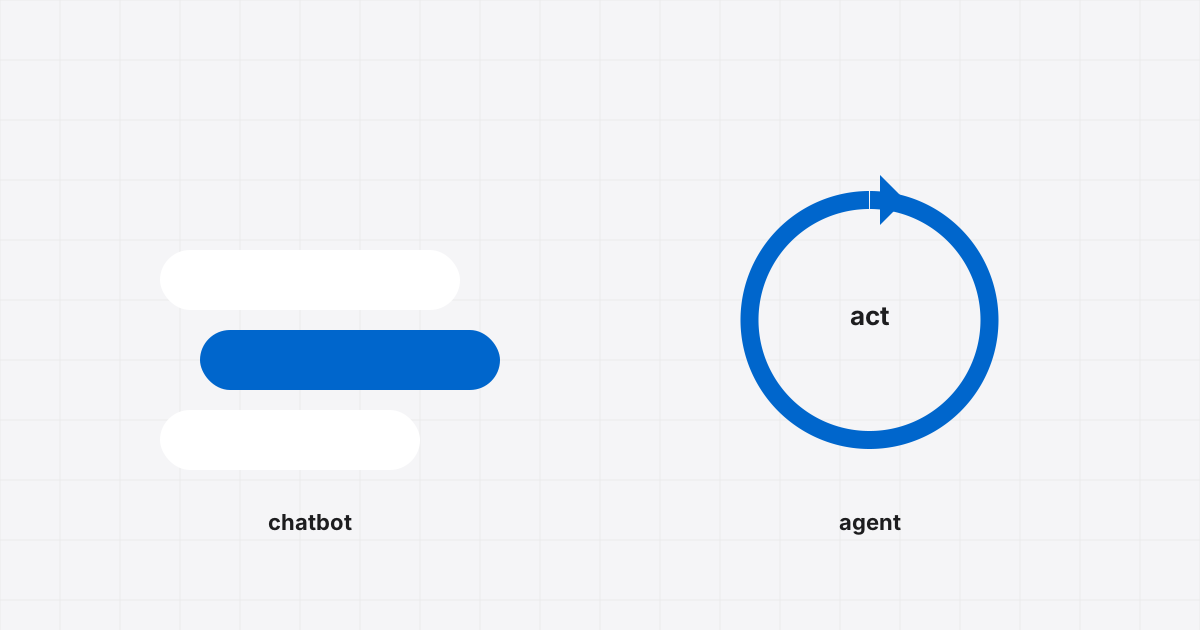
Every second enquiry we get now includes the words "AI agent". Half the time the person means a chatbot. The distinction is not academic: it changes what you build, what it costs, what can go wrong, and whether it returns anything.
The one-line difference
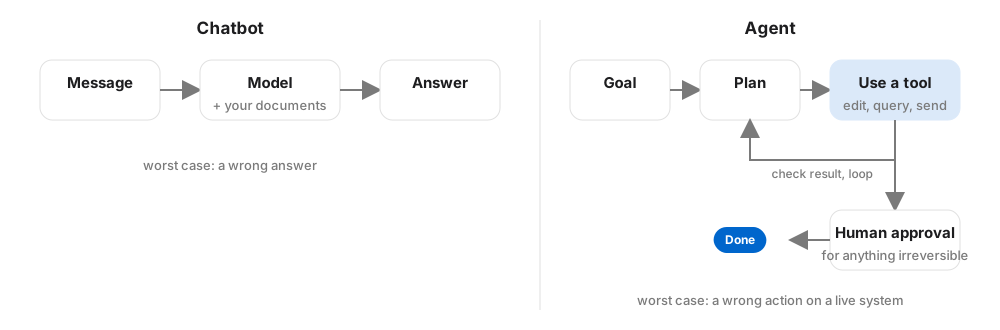
A chatbot takes a message and returns a message. An agent takes a goal, decides on steps, uses tools to carry them out, checks the result and keeps going until the goal is met or it needs a human.
The model underneath can be the same. What separates them is the loop and the tools.
What a chatbot is good for
A chatbot is a conversation surface. Modern ones, grounded in your own documents with retrieval, are genuinely useful:
- Answering the fifty questions your phone line gets every week, at 2 am, in any language
- Qualifying a lead before a human calls back
- Guiding someone to the right page, form or product
- Internal help desks: "what is our refund policy", "where is the onboarding checklist"
It is contained. The worst case is a wrong answer, which you mitigate with grounding, citations and a clear "I don't know" path. It is cheap to run and fast to ship. We host ours on a serverless stack with a retrieval index and it costs a few dollars a month.
What an agent is for
An agent does work. Give it access to your systems through tools, MCP connections in our case, and it can:
- Read every page of a website, find broken links and hidden elements, and write the fix ticket
- Pull last week's analytics, search data and ad spend, compare to the week before, and draft the client report
- Watch a form inbox, enrich the lead, create the CRM record and notify the right salesperson
- Take a content brief, build a draft page in the site's design system, and hand it to a human to publish
The output is not a message. It is changed state in your systems. That is the value, and that is the risk.
The cost that people miss
Chatbots cost tokens. Agents cost tokens plus guardrails, and the guardrails are most of the engineering:
| Chatbot | Agent | |
|---|---|---|
| Worst case | Wrong answer | Wrong action on a live system |
| Needs | Good grounding, clear tone | Permissions, read-only defaults, approval steps, logs |
| Runs | Per conversation | Per task, often scheduled, sometimes for minutes |
| Testing | Sample questions | Sample tasks on a staging copy, with rollback |
| Time to ship | Days | Weeks, mostly spent on what it is not allowed to do |
An agent that can edit a client's website needs a read-only mode, a rule that production changes go through a ticket, and a human approval on anything irreversible. We learned each of those the hard way, and we now build them in from day one.

The middle ground: a chatbot that can do one thing
Most businesses do not need a general agent. They need a chatbot that can take a single action: book the appointment, create the support ticket, send the quote request to the right inbox. That is a chatbot with one tool and one approval step. It captures most of the value with almost none of the risk, and it is where we usually start.
How to decide
Ask what happens if it is wrong.
- If a wrong answer is annoying but harmless, build a chatbot and ground it well.
- If the job is repetitive, multi-step and lives in systems you control, build an agent, on staging first, read-only first, with a person approving the last step.
- If it is somewhere in between, build the chatbot and give it exactly one tool.
And measure. A chatbot is worth it when it deflects calls or converts more visitors. An agent is worth it when it removes a routine that a person was doing every week. If you cannot name the routine, you do not need the agent yet.
We build both, and we are honest about which one you need. Tell us the job and we will tell you which it is.